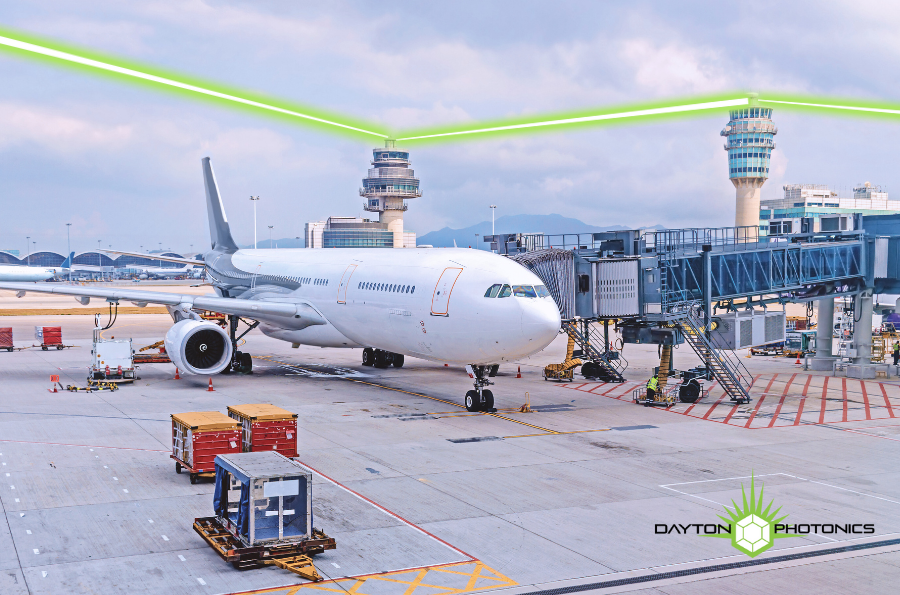
Free-Space Optics: From 90s Promise to Modern Infrastructure Tool
What was once a technology limited by technical constraints, Free-Space Optics (FSO) has matured through significant advancements. It is now used as a sophisticated, complementary infrastructure tool that enhances network resiliency and accelerates connectivity in environments where traditional fiber is impractical or cost-prohibitive.

Why managing AI risk presents new challenges
Aliquet morbi justo auctor cursus auctor aliquam. Neque elit blandit et quis tortor vel ut lectus morbi. Amet mus nunc rhoncus sit sagittis pellentesque eleifend lobortis commodo vestibulum hendrerit proin varius lorem ultrices quam velit sed consequat duis. Lectus condimentum maecenas adipiscing massa neque erat porttitor in adipiscing aliquam auctor aliquam eu phasellus egestas lectus hendrerit sit malesuada tincidunt quisque volutpat aliquet vitae lorem odio feugiat lectus sem purus.
- Lorem ipsum dolor sit amet consectetur lobortis pellentesque sit ullamcorpe.
- Mauris aliquet faucibus iaculis vitae ullamco consectetur praesent luctus.
- Posuere enim mi pharetra neque proin condimentum maecenas adipiscing.
- Posuere enim mi pharetra neque proin nibh dolor amet vitae feugiat.
The difficult of using AI to improve risk management
Viverra mi ut nulla eu mattis in purus. Habitant donec mauris id consectetur. Tempus consequat ornare dui tortor feugiat cursus. Pellentesque massa molestie phasellus enim lobortis pellentesque sit ullamcorper purus. Elementum ante nunc quam pulvinar. Volutpat nibh dolor amet vitae feugiat varius augue justo elit. Vitae amet curabitur in sagittis arcu montes tortor. In enim pulvinar pharetra sagittis fermentum. Ultricies non eu faucibus praesent tristique dolor tellus bibendum. Cursus bibendum nunc enim.

How to bring AI into managing risk
Mattis quisque amet pharetra nisl congue nulla orci. Nibh commodo maecenas adipiscing adipiscing. Blandit ut odio urna arcu quam eleifend donec neque. Augue nisl arcu malesuada interdum risus lectus sed. Pulvinar aliquam morbi arcu commodo. Accumsan elementum elit vitae pellentesque sit. Nibh elementum morbi feugiat amet aliquet. Ultrices duis lobortis mauris nibh pellentesque mattis est maecenas. Tellus pellentesque vivamus massa purus arcu sagittis. Viverra consectetur praesent luctus faucibus phasellus integer fermentum mattis donec.
Pros and cons of using AI to manage risks
Commodo velit viverra neque aliquet tincidunt feugiat. Amet proin cras pharetra mauris leo. In vitae mattis sit fermentum. Maecenas nullam egestas lorem tincidunt eleifend est felis tincidunt. Etiam dictum consectetur blandit tortor vitae. Eget integer tortor in mattis velit ante purus ante.
- Vestibulum faucibus semper vitae imperdiet at eget sed diam ullamcorper vulputate.
- Quam mi proin libero morbi viverra ultrices odio sem felis mattis etiam faucibus morbi.
- Tincidunt ac eu aliquet turpis amet morbi at hendrerit donec pharetra tellus vel nec.
- Sollicitudin egestas sit bibendum malesuada pulvinar sit aliquet turpis lacus ultricies.
“Lacus donec arcu amet diam vestibulum nunc nulla malesuada velit curabitur mauris tempus nunc curabitur dignig pharetra metus consequat.”
Benefits and opportunities for risk managers applying AI
Commodo velit viverra neque aliquet tincidunt feugiat. Amet proin cras pharetra mauris leo. In vitae mattis sit fermentum. Maecenas nullam egestas lorem tincidunt eleifend est felis tincidunt. Etiam dictum consectetur blandit tortor vitae. Eget integer tortor in mattis velit ante purus ante.
Where It All Began
Free-space optical (FSO) communication is not a new idea. In fact, it captured significant attention in the late 1990s during the first broadband expansion wave. At the time, the concept was compelling: transmit high-speed data over narrow beams of light through the air, eliminating the need for trenching fiber.
Early companies such as Terabeam and others demonstrated that optical wireless links could achieve impressive speeds for their era. However, the broader infrastructure ecosystem of the 1990s was not yet ready to support widespread deployment. Beam alignment was largely manual, atmospheric modeling was limited, adaptive tracking systems were immature, and network monitoring capabilities were rudimentary compared to today’s standards. In many cases, FSO was positioned as a wholesale replacement for fiber — a role that proved unrealistic under the technological constraints of that period.
A Modern Infrastructure Tool for Hybrid Networks
Over the past two decades, the landscape has changed dramatically. Advances in photonics, optical components, beam steering, adaptive tracking, digital signal processing, and real-time network monitoring have significantly improved performance and reliability. At the same time, deployment philosophies have evolved. Modern FSO systems are no longer presented as a universal substitute for fiber, but rather as a complementary infrastructure tool — particularly valuable in scenarios where fiber is delayed, cost-prohibitive, environmentally constrained, or in need of resiliency overlays. Just as many technologies mature over time — from electric vehicles to wireless broadband — free-space optics has benefited from improvements in materials science, engineering precision, and data-driven operational modeling.
Today’s generation of FSO platforms reflects those cumulative advancements. With enhanced stability, improved environmental tolerance, and integration into standard Ethernet architectures, modern optical wireless systems are designed to augment existing network strategies, accelerate deployment timelines, and increase resiliency where physical infrastructure faces constraints. The underlying physics has not changed — light has always been an effective carrier of information — but the engineering, use cases, and deployment maturity have evolved substantially.
Dayton Photonics has been focused on advancing this category through contemporary photonics engineering and refined deployment models. Solutions such as THEIA™ reflect the cumulative lessons learned over decades — not as a reinvention of a concept from the nineties, but as a modernized infrastructure tool designed to operate within today’s hybrid network architectures.

As broadband infrastructure continues to expand into more complex and environmentally sensitive environments, technologies once considered ahead of their time are finding new relevance. Free-space optics is best understood not as a relic of the past, but as a technology that has matured alongside the broader telecommunications ecosystem — positioned today as a practical, engineered solution within a diversified connectivity toolkit.